
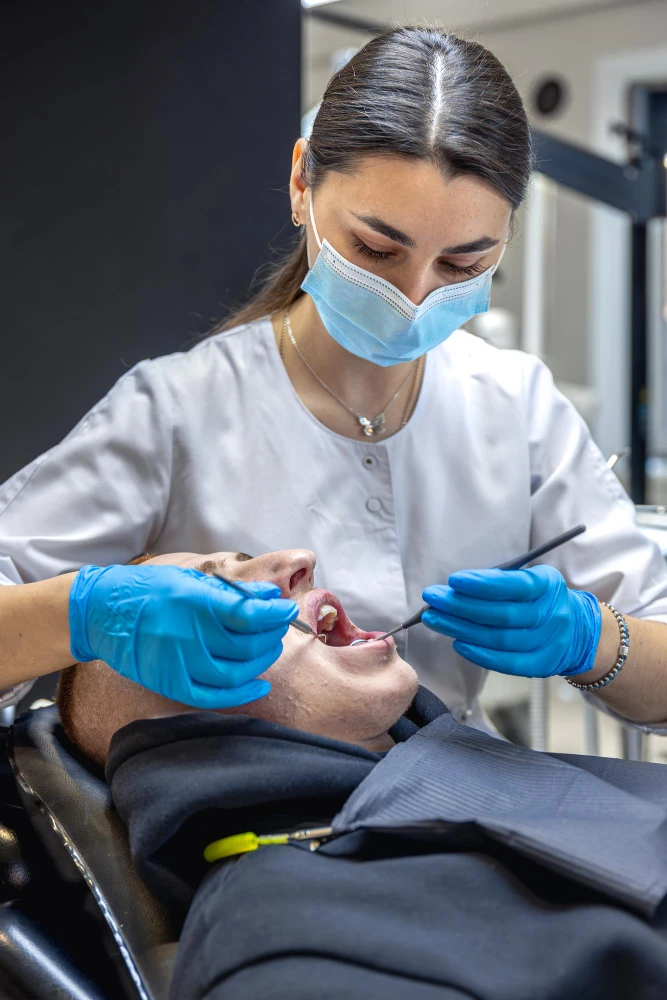
Permanent Tooth Replacement with Dental Implants
Dental implants are permanent, natural-looking replacements for missing teeth that restore chewing, speaking, and your smile. At Smile Collective in Ghatkopar, our experienced dentists use advanced Cone Beam 3D X-Ray technology to precisely plan your implant treatment for an accurate, comfortable fit
A dental implant is a small titanium screw that replaces the natural tooth root. It integrates with the jawbone through osseointegration, providing a strong and natural-looking foundation for your replacement tooth.
Who May Be a Candidate for Dental Implants?
The current Dental Implants page lists the following as common considerations when assessing implant suitability:
- Patients missing a single tooth or multiple teeth.
- Patients looking for a more permanent alternative to dentures.
- Patients with adequate jawbone density to accommodate an implant.
- Patients without certain conditions, such as uncontrolled diabetes, that may affect healing after implant placement.
During the initial consultation, the dentist discusses the available options and determines which treatment may be appropriate for the patient's individual needs.
Dr. Neel Parikh
Dr. Neel Parikh is listed by Smile Collective in Ghatkopar as a BDS Consultant Implantologist and forms part of the clinic's multi-specialty dental team.
Implant treatment planning may involve evaluation of the missing teeth, jawbone and surrounding structures before a suitable restorative approach is selected.
View Doctor ProfileExplore Dental Implant Treatment Options
Learn about single-tooth implants, implant bridges, implant-supported dentures, 3D CBCT planning and the stages of implant treatment.
Book ConsultationDental implants are an effective option for patients missing individual teeth. Implants are like a metal root replacing the original tooth. After the implant restoration process is complete, gaps are eliminated and function and appearance are restored. In addition, dental implants do not require surrounding teeth to be cut down, as some tooth replacement options do.
Step 1: The implant is placed into the bone.
Step 2: It is covered with a protective cap while healing takes place.
Step 3: After healing, an abutment is attached to form the core of the replacement tooth.
Step 4: A natural-looking porcelain crown is attached to the abutment and customised to match the size, shape and colour of the surrounding teeth.
At our practice, the entire dental implants procedure can be completed in as few as four months.Contact us today to learn how dental implants could change your smile.
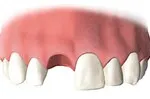 Step 1
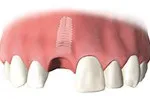 Step 2
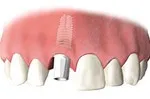 Step 3
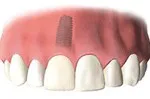 Step 4
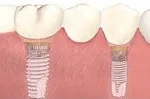
Implant bridges are a comfortable, effective option for individuals missing one or more adjacent teeth. Implant supported bridges are permanently fixed to the implant posts to allow for maximum support.
Step 1: Implant posts are placed and allowed to bond with the surrounding bone.
Step 2: After healing, temporary abutments may be placed so the surrounding tissue can be contoured.
Step 3: Permanent abutments are then placed to form the core of the replacement teeth.
Step 4: The bridge is permanently attached to the implants without metal hooks or clasps.
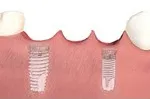 Step 1
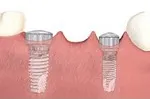 Step 2
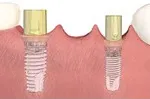 Step 3
 Step 4
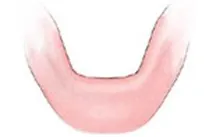
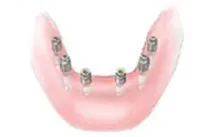
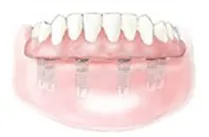
Implant supported dentures, also known as anchored dentures, use a special attachment to provide a more secure and stabilized fit when compared to traditional dentures. Unlike regular dentures that rest on the gums, implant supported dentures “snap” into place with dental implants that have been fused to the jawbone. As a result, the dentures look and function more like natural teeth. Patients no longer have to worry about their dentures slipping or falling out, and they can eat, speak, and smile with a greater sense of comfort and confidence! If you are a current dentures wearer and are dissatisfied with their fit and feel, Braces & Beyond – Complete Dental Care can help you enhance the appearance and function of your teeth with implant dentures.
- Natural-looking, aesthetically pleasing results.
- No adhesives or pastes.
- Alleviation of bad breath associated with dentures.
- Restored ability to chew, drink and speak normally.
- Increased comfort.
- Simplified maintenance because the dentures can be brushed and cleaned similarly to natural teeth.
- Reduced potential for bone atrophy.
The current page lists people who are missing all or multiple teeth, people seeking a more secure type of denture, and people with sufficient jawbone density to support implants as possible candidates for implant-supported dentures.
During consultation, the dentist evaluates the individual case and discusses the available options for anchoring full or partial dentures before recommending a treatment plan.
Smile Collective in Ghatkopar uses Cone Beam X-Ray technology during implant planning to obtain a three-dimensional map of the mouth. CBCT scans combined with 3D software allow important factors such as bone density, bone width and the relationship between the proposed implant position and nearby anatomical structures to be assessed in three dimensions.
The current page describes a quick scan that is processed to recreate the patient's 3D anatomy, allowing the dentist to perform virtual planning and select the appropriate implant size and position before the insertion procedure.
Dental implants are generally placed during a surgical appointment and then require a period of osseointegration. Osseointegration is the process in which the implant root becomes directly anchored to the jawbone.
The current page states that an osseointegrated implant may take approximately three to six months to anchor and heal. After the implant has integrated with the jawbone, the dentist can complete the restorative phase by attaching the artificial prosthesis or crown.
Dental implants are among the most successful procedures in dentistry. There is no guarantee that an implant procedure will be successful, but studies have shown a five-year success rate of 95% for lower jaw implants and 90% for upper jaw implants. The success rate for upper jaw implants is slightly lower because the upper jaw (especially the posterior section) is less dense than the lower jaw, making successful implantation and osseointegration potentially more difficult to achieve. Lower posterior implantation has the highest success rate for all dental implants.
Our dentists will evaluate your needs during an initial consultation and talk with you about your options. For most patients, dental implant procedures have extraordinary success rates and significantly improve form and function of the teeth with permanent results.
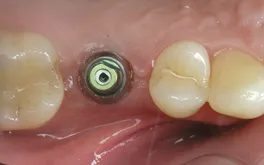
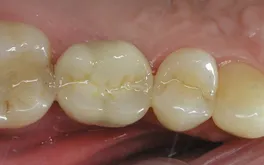
In cases where bone loss is present, the current page states that bone expansion may be used to create a more favourable situation for implant placement. A consultation and appropriate imaging are required to determine whether this or another approach is suitable for the individual patient.
Phase 1: The implant is placed and, in many cases, remains covered beneath the gums during the initial healing stage.
Phase 2: After approximately 3–6 months, a metal post or extension is attached to the implant.
Phase 3: Replacement teeth are created and fitted, which may require several appointments for try-ins and corrections.
Common Questions About Dental Implants
Find answers to common questions about implant treatment, suitability, healing and tooth replacement.
Talk to Us About Dental Implants
Send us your details to request a dental implant consultation. Our team will get in touch with you regarding your appointment request.